

This article is based on official sources for historical facts and statistics.
The ten churches listed are recommendations selected by considering their significance in Korean Catholic history, architectural beauty, and recognition as pilgrimage and tourist destinations.
Seoul WYD 2027 will be the second World Youth Day held in Asia. It will be a meaningful event that introduces the world to the lay-led origins of the Korean Catholic Church and its heritage of martyrdom.
Since the official statistics for the end of 2026 have not yet been finalized, the article uses the latest available data, indicating approximately six million Catholics, or about 11% of South Korea’s population.
From a Land of Martyrdom to a Festival of Youth
— Discovering Korean Catholicism Ahead of Seoul WYD 2027
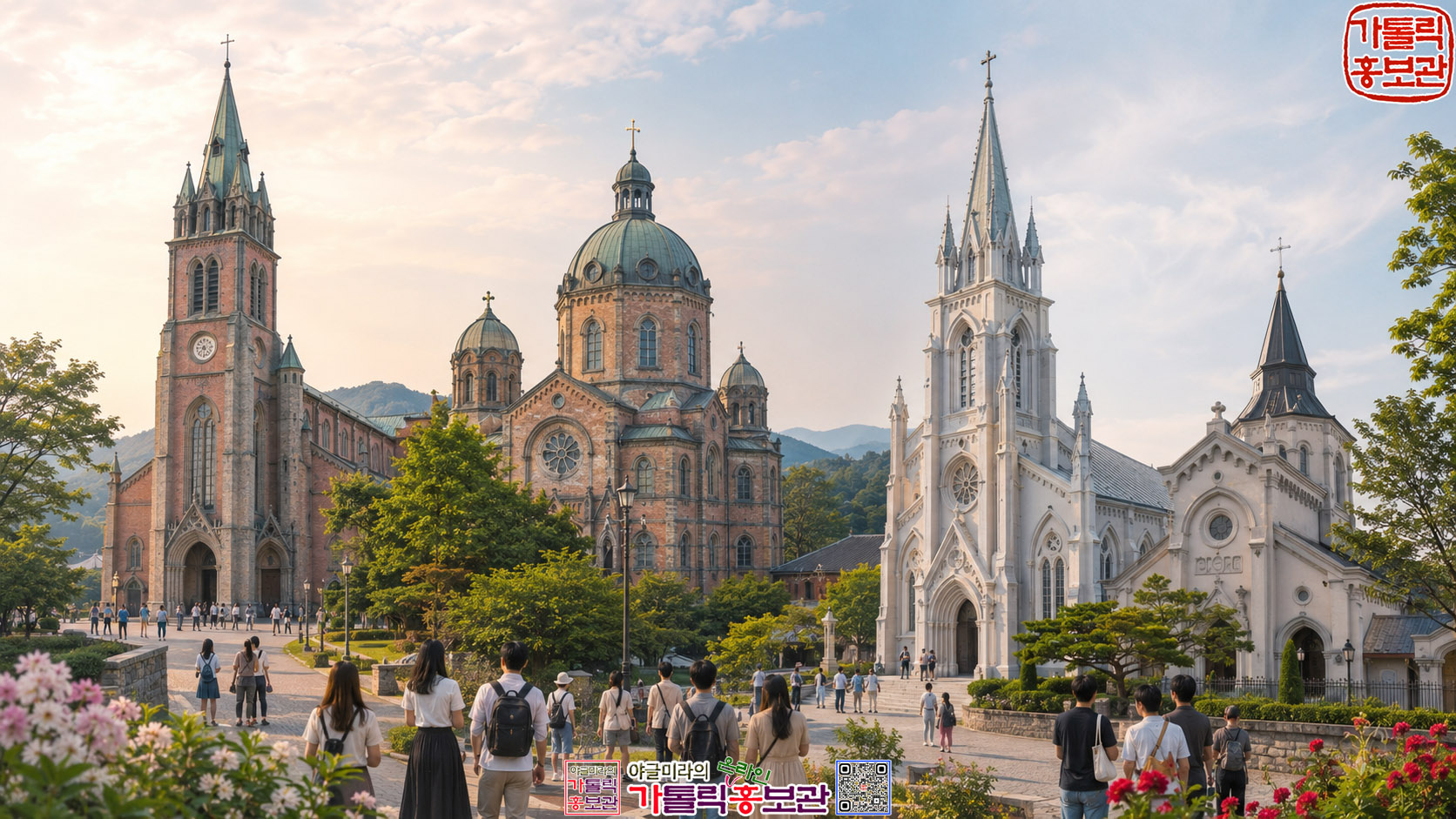
From August 3 to 8, 2027, Seoul will host World Youth Day (WYD), the second such event ever held in Asia.
Before young people from around the world set foot on Korean soil, let us explore the 240-year story of the Catholic Church in Korea.
1. Korean Catholicism and Its Unique Character
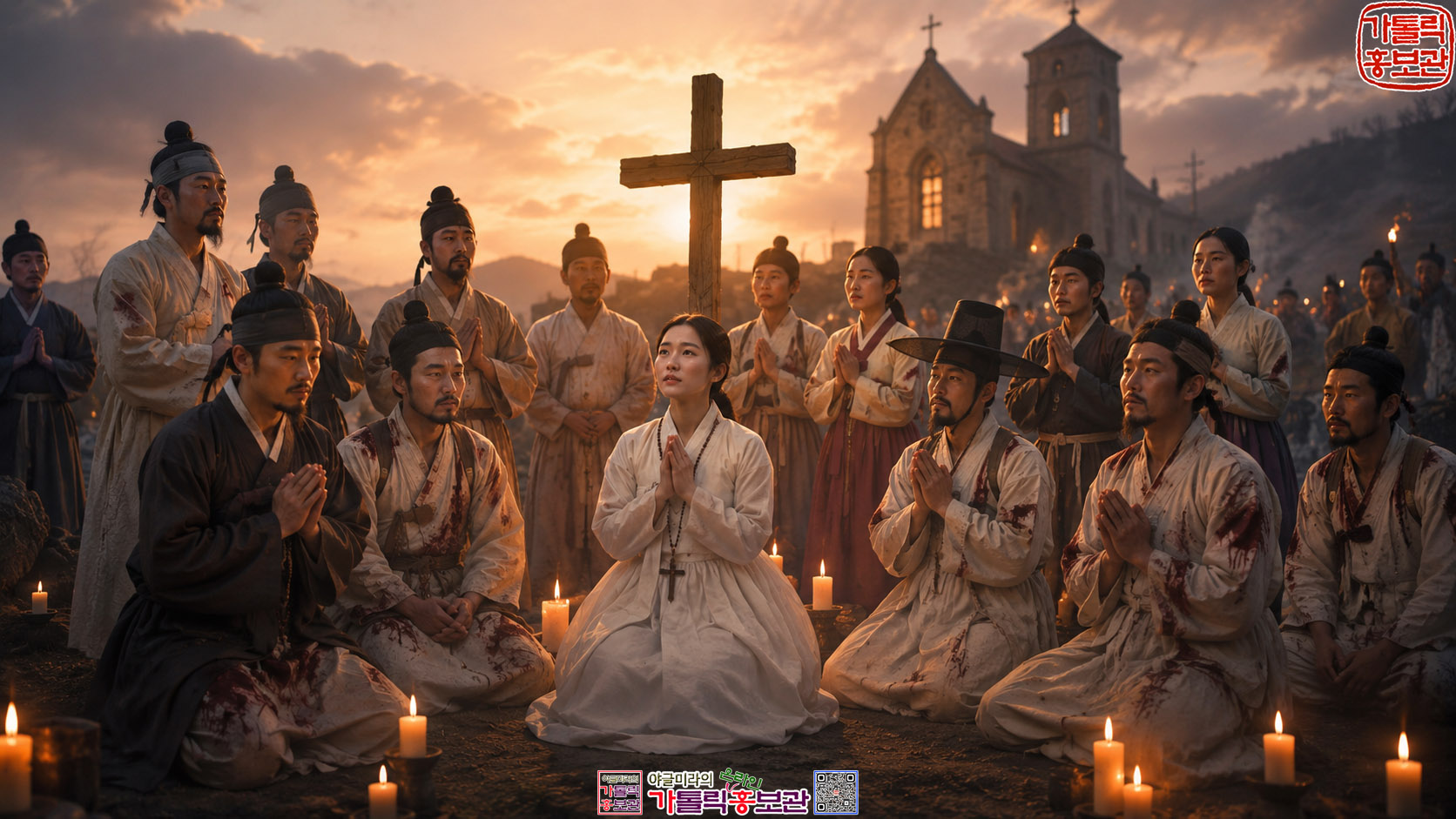
A Church Founded by Laypeople
The Catholic Church in Korea began in 1784, when Yi Seung-hun, who was baptized Peter in Beijing, returned home.
The most distinctive feature of Korean Catholicism is that it was not first established by foreign missionaries. Instead, Korean scholars and laypeople discovered, studied, and voluntarily embraced the faith on their own.
For this reason, the Korean Church is regarded as a very rare example in world Catholic history of a Church founded through the voluntary acceptance of the faith by laypeople.
2. A History of Persecution and Martyrdom
One Hundred Years of Persecution and Approximately 10,000 Martyrs
Joseon society placed great importance on the Confucian social order and ancestral rites.
Catholics, however, believed that all people were equal before God and did not accept ancestral rites as religious worship.
As a result, Catholicism was regarded as an ideology that threatened the established social order.
Many believers refused to renounce their faith and sacrificed their lives.
During the late Joseon period in the nineteenth century, the Catholic Church came into conflict with the Confucian order and endured four major persecutions over approximately one hundred years.
- The Sinyu Persecution of 1801: Jeong Yak-jong, Father Zhou Wen-mo, and others were martyred.
- The Gihae Persecution of 1839: Bishop Laurent-Joseph-Marius Imbert and other foreign missionaries were martyred.
- The Byeong-o Persecution of 1846: Saint Andrew Kim Tae-gon, Korea’s first Catholic priest, was martyred.
- The Byeongin Persecution of 1866: Approximately 8,000 to 10,000 Catholics were martyred, making it the largest persecution in Korean Catholic history.
The legacy of these persecutions was honored in 1984, when Pope John Paul II canonized 103 Korean martyrs, and again in 2014, when Pope Francis beatified 124 Korean martyrs.
3. The Korean Catholic Church in 2026
Approaching Six Million Catholics
According to Statistics of the Catholic Church in Korea 2024, there were 5,997,654 Catholics, representing 11.4% of the total population.
The Korean Catholic Church is therefore approaching the milestone of six million faithful.
As of 2026, the Church in Korea consists of 16 dioceses, approximately 5,900 priests, and 1,789 parishes nationwide.
4. Ten Beautiful Catholic Churches and Holy Sites to Visit
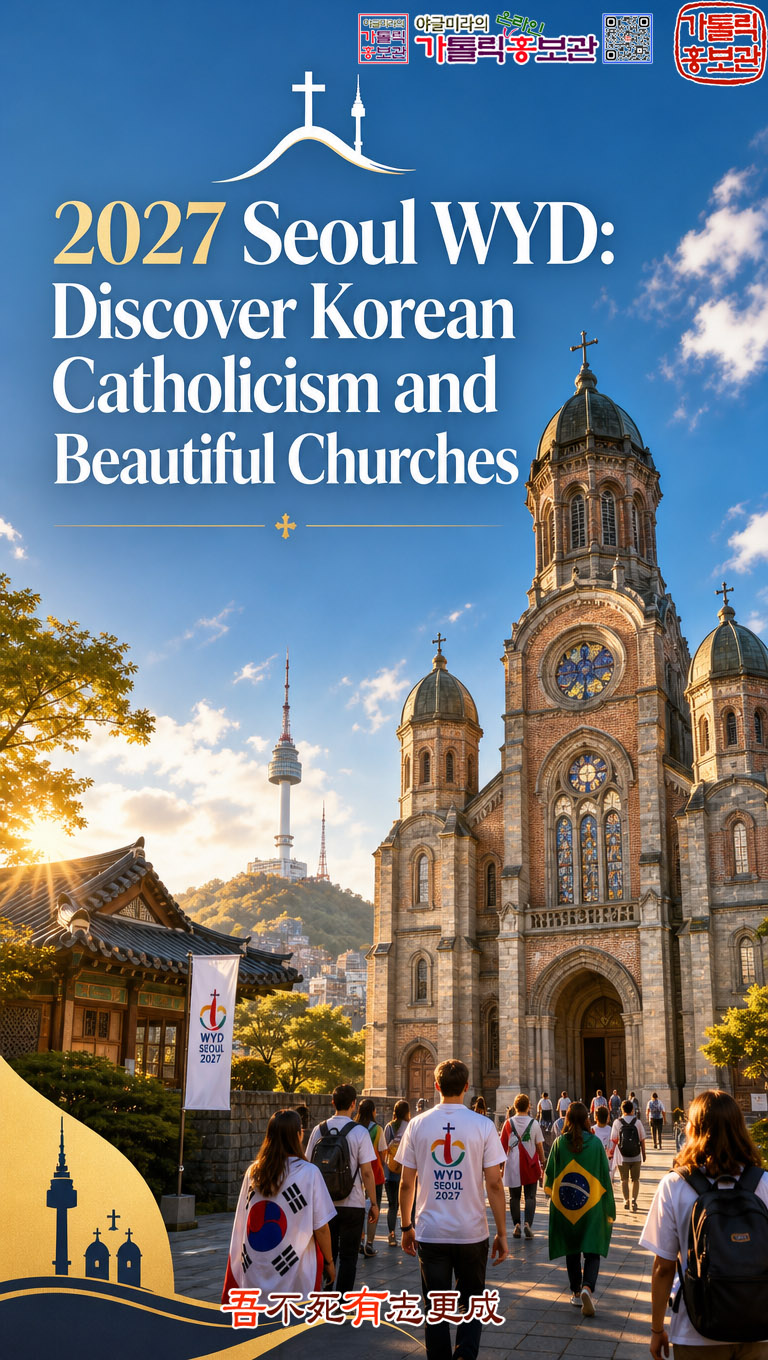
The following places are recommended based on selections by the Korea Tourism Organization, diocesan recognition, and recommendations from Catholic believers.
1. Myeongdong Cathedral
Location: Seoul
The heart of Korean Catholicism and a Gothic-style cathedral completed in 1898.
2. Yakhyeon Catholic Church
Location: Jungnim-dong, Seoul
Built in 1892, it is Korea’s first Western-style brick Catholic church.
3. Gyesan Cathedral
Location: Daegu
The first Gothic-style cathedral in the Yeongnam region and one of Korea’s most renowned historic cathedrals.
4. Jeondong Cathedral
Location: Jeonju
A Romanesque-Byzantine-style cathedral built on a historic site of martyrdom.
5. Gongseri Catholic Church
Location: Asan, South Chungcheong Province
Selected by the Korea Tourism Organization in 2005 as one of Korea’s most beautiful Catholic churches.
6. Dapdong Cathedral
Location: Incheon
Completed in 1897, it is regarded as the mother church of the Diocese of Incheon.
7. Gamgok Maegoe Shrine of Our Lady
Location: Eumseong, North Chungcheong Province
Korea’s first officially recognized Marian pilgrimage site.
8. Pungsuwon Catholic Church
Location: Hoengseong, Gangwon Province
Completed in 1907, it was the first Catholic church built by a Korean priest.
9. Nabawi Catholic Church
Location: Iksan, North Jeolla Province
Located near the place where Father Andrew Kim Tae-gon first entered Korea, the church combines traditional Korean architecture with Western design.
10. Jeoldusan Martyrs’ Shrine
Location: Hapjeong, Seoul
A historic site of martyrdom from the Byeongin Persecution and home to the Korean Martyrs Museum.
※광주 대교구 목포 산정동 성당 -전남 목포시
한국 최초의 레지오 마리애가 시작된 역사적인 성당입니다.
Special Mention: Sanjeong-dong Catholic Church
Location: Mokpo, South Jeolla Province
This historic church is where the Legion of Mary was first established in Korea.
5. How Koreans View Catholicism
Strengths and Challenges
According to surveys on public perceptions of religion conducted by Gallup Korea and Hankook Research between 2024 and 2025, Catholicism received a favorable rating of 52.7 points, ranking second among Korea’s three major religious traditions.
Positive Perceptions
In Korean society, Catholicism is generally viewed as a calm, rational, and socially responsible religion.
It is also positively recognized for its commitment to charitable service, human rights, and peace.
The beautiful architecture of Catholic churches, the solemnity of the liturgy, and the Church’s contributions to education and healthcare also leave a favorable impression.
Criticisms and Challenges
Some people, however, feel that Catholic teachings are difficult to understand and that the Mass and liturgical traditions are unfamiliar.
Others point out that the Church does not communicate sufficiently with younger generations.
There are also criticisms that the Church may appear overly cautious or authoritative when responding to certain social issues.
A Church Built on the Blood of Martyrs,
Blossoming Again as a Festival of Youth
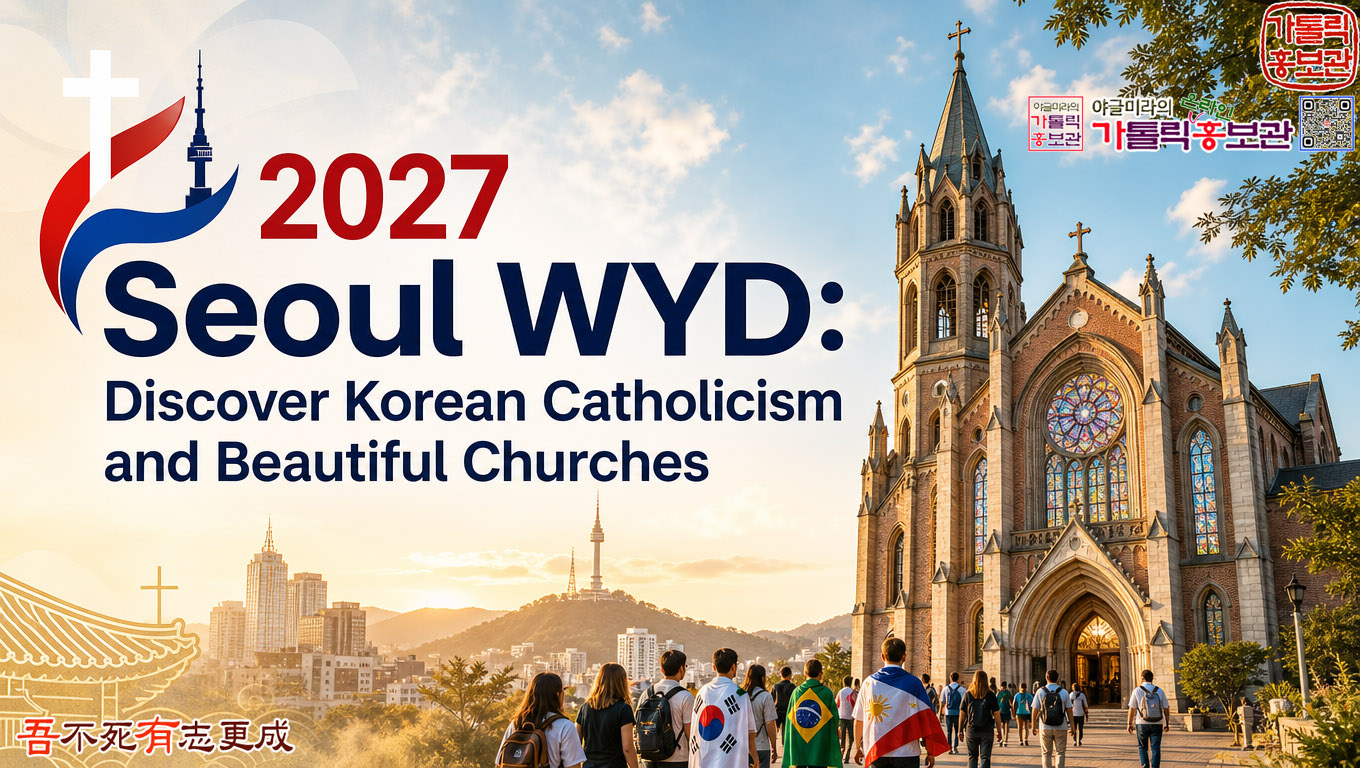
Seoul WYD 2027 will be an opportunity for the Korean Catholic Church to share its heritage of martyrdom and its lay-led spirit with the world.
At the same time, it will become a global celebration that transcends religion, culture, generations, and national borders—bringing people together to deepen mutual understanding and share peace and hope.
“In August 2027, Korea’s 240-year journey of faith will meet young people from around the world.”

https://blog.naver.com/3ss10/224308294258
서울 WYD 2027, 한국 가톨릭 천주교역사, 아름다운 성당 10곳
서울 WYD 2027, 한국 가톨릭 아름다운 성당 10곳 천주교 이야기 “Seoul WYD 2027: The Story of ...
blog.naver.com

- '가톨릭홍보관' 안내 -
(온라인선교 가이드)
▶홈페이지 -http://ygmr.kr/
▶블로그 - https://blog.naver.com/3ss10
▶ 유튜브채널 - https://www.youtube.com/@3ss10
'Catholic & Legio' 카테고리의 다른 글
| 유대인은 왜 예수를 죽였을까? 역사적 배경과 진짜 이유 총정리 (0) | 2026.04.08 |
|---|---|
| 사순절 뜻과 2026년 날짜 총정리/재의 수요일부터 부활절까지 완벽 가이드 (2) | 2026.03.02 |
| 크리스트교, 기독교, 가톨릭에 영향을 준 5대 제국의 세계사 (1) | 2025.11.21 |
| 기독교 신약성경 공관복음과 Q 큐복음서와 도마복음서의 관계와 차이점 (12) | 2025.08.11 |
| 동방정교회, 동방가톨릭과 서방가톨릭의 공통점과 차이점 (0) | 2025.07.07 |


